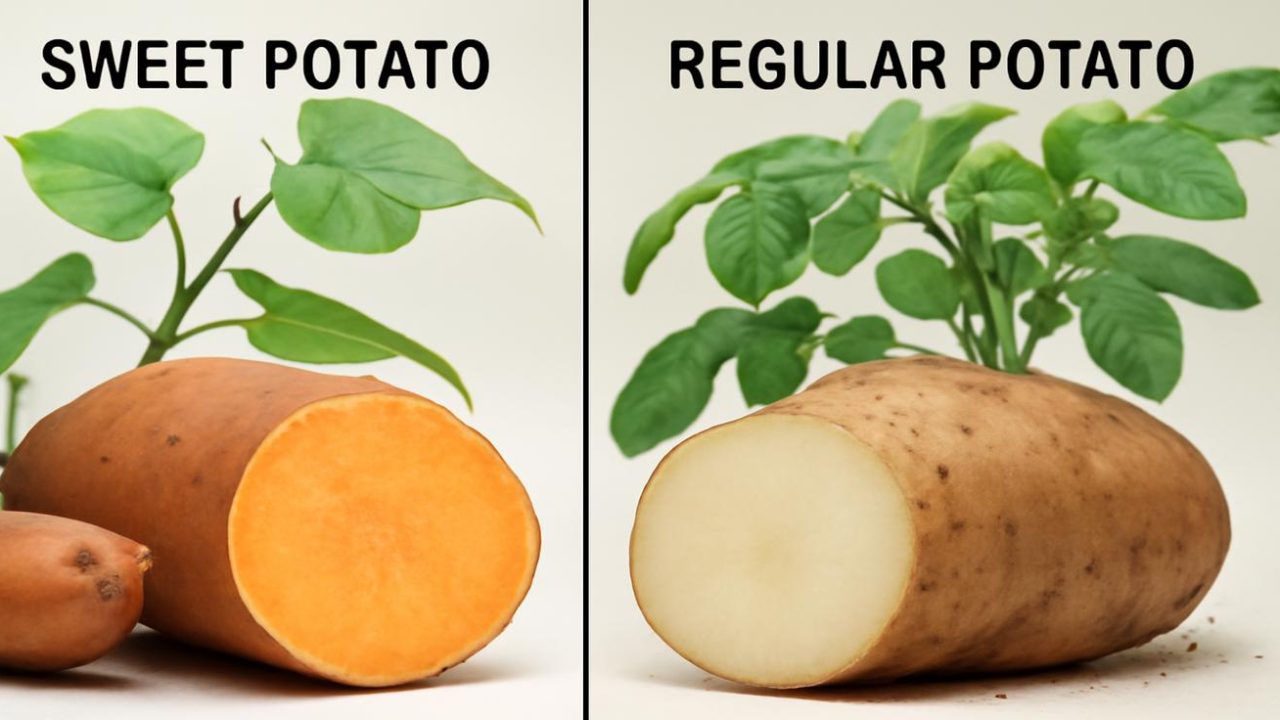
Sweet potatoes and regular potatoes share a name, occupy the same grocery store aisles, and appear together on dinner tables worldwide—yet science reveals they are not closely related at all. These two beloved vegetables belong to completely different plant families and evolved along entirely separate evolutionary paths.
The confusion is understandable. Both grow underground, both are starchy staples, and both carry the word “potato” in their common names. But botanically speaking, they might as well be strangers who happened to show up at the same potluck.
The scientific reality behind this culinary mix-up reveals fascinating differences that go far deeper than taste and texture.

Two Different Plant Families, Two Different Stories
Regular potatoes belong to the nightshade family, Solanaceae, sharing lineage with tomatoes, eggplants, peppers, and even tobacco. The scientific name for the common potato is Solanum tuberosum, placing it firmly among plants that produce everything from salsa ingredients to nicotine.
Sweet potatoes, meanwhile, are members of the morning glory family, Convolvulaceae. Their scientific name, Ipomoea batatas, reveals their true relatives: the twining, trumpet-flowered vines more commonly found in ornamental gardens than vegetable patches.
This family separation represents a massive evolutionary gap. In plant taxonomy, families are major branches on the tree of life, not casual groupings. The common ancestor shared by sweet potatoes and regular potatoes existed deep in evolutionary history.

The visual evidence becomes clear when you observe sweet potato plants growing. Their heart-shaped leaves and small purple-white funnel flowers look exactly like what they are—decorative morning glory vines that happen to produce edible storage roots.
The Science Behind What Grows Underground
Even their underground structures tell different biological stories. Regular potatoes are true tubers—swollen underground stems designed for energy storage. Those familiar “eyes” dotting a potato’s surface are actually buds capable of sprouting new shoots.
Sweet potatoes develop from an entirely different mechanism. They are enlarged storage roots, not modified stems. This fundamental difference affects everything from how they reproduce to how they store nutrients.

The distinction becomes obvious if you’ve ever forgotten potatoes in a dark pantry. Regular potatoes send out pale, snake-like stems from their eyes. Sweet potatoes, by contrast, develop root systems and shoots in a completely different pattern.
| Characteristic | Regular Potato | Sweet Potato |
|---|---|---|
| Plant Family | Solanaceae (Nightshade) | Convolvulaceae (Morning Glory) |
| Scientific Name | Solanum tuberosum | Ipomoea batatas |
| Underground Structure | Tuber (modified stem) | Storage root |
| Related Plants | Tomatoes, peppers, eggplant | Morning glories, bindweed |
Why the Confusion Persists
The naming confusion has deep historical roots. When European explorers encountered sweet potatoes in the Americas, they were already familiar with regular potatoes. The superficial similarities—underground growth, starchy texture, substantial nutrition—led to shared terminology that persisted across languages and cultures.
Both vegetables serve similar culinary roles as carbohydrate-rich staples, reinforcing the perception that they must be related. Both can be baked, mashed, fried, or roasted. Both store well and provide essential calories.

The grocery store experience strengthens this misconception. Sweet potatoes and regular potatoes occupy adjacent produce sections, get purchased for similar meal planning purposes, and often substitute for each other in recipes.
But their nutritional profiles reveal the underlying biological differences. Sweet potatoes contain significantly higher levels of beta-carotene, giving them their characteristic orange color. Regular potatoes provide different vitamin and mineral compositions reflecting their distinct evolutionary development.
What This Means for How We Think About Food
Understanding the true relationship between these vegetables highlights how common food assumptions can be misleading. Many foods we group together based on appearance, taste, or culinary use have completely different biological origins.

This knowledge affects everything from gardening decisions to nutritional planning. Sweet potatoes and regular potatoes have different growing requirements, storage needs, and optimal preparation methods precisely because they evolved as fundamentally different types of plants.
For gardeners, recognizing sweet potatoes as morning glory relatives explains their vine-like growth patterns and flowering characteristics. For cooks, understanding their different cellular structures explains why they respond differently to various cooking methods.
The botanical reality also illuminates broader principles about plant evolution and adaptation. Two completely unrelated plant families independently evolved underground storage strategies, demonstrating how similar environmental pressures can produce superficially similar solutions.

The Bigger Picture About Plant Relationships
The sweet potato and regular potato story exemplifies how evolutionary biology shapes the food we eat in unexpected ways. Plants that seem obviously related often aren’t, while truly related plants may appear completely different.
This pattern repeats throughout the plant kingdom. Cashews are more closely related to poison ivy than to other nuts. Rhubarb shares more genetic heritage with buckwheat than with other garden vegetables. Strawberries, raspberries, and blackberries represent three different approaches to berry development.
Modern genetic analysis continues to reveal surprising relationships that challenge traditional food categorizations. DNA evidence sometimes confirms suspected connections and sometimes completely overturns assumptions based on appearance or taste.

For the millions of people who regularly eat both sweet potatoes and regular potatoes, this scientific reality doesn’t change their nutritional value or culinary versatility. But it does provide a fascinating example of how evolutionary history creates unexpected stories in everyday foods.
Frequently Asked Questions
Are sweet potatoes and regular potatoes related at all?
They share a very distant common ancestor deep in evolutionary history, but they belong to completely different plant families and are not closely related.
Why do we call both of them “potatoes”?
The shared name comes from historical confusion when European explorers encountered both vegetables and noted their similar underground growth and starchy properties.

What family do regular potatoes belong to?
Regular potatoes belong to the nightshade family (Solanaceae), along with tomatoes, peppers, and eggplants.
What makes sweet potatoes different structurally?
Sweet potatoes are enlarged storage roots, while regular potatoes are tubers, which are modified underground stems with “eyes” that can sprout new plants.
Do sweet potatoes have flowers like morning glories?
Yes, sweet potato plants produce small purple-white funnel-shaped flowers similar to their morning glory relatives.
Does this relationship affect how they should be cooked?
Their different cellular structures explain why they respond differently to cooking methods, though both remain versatile ingredients for various preparation techniques.











Leave a Comment