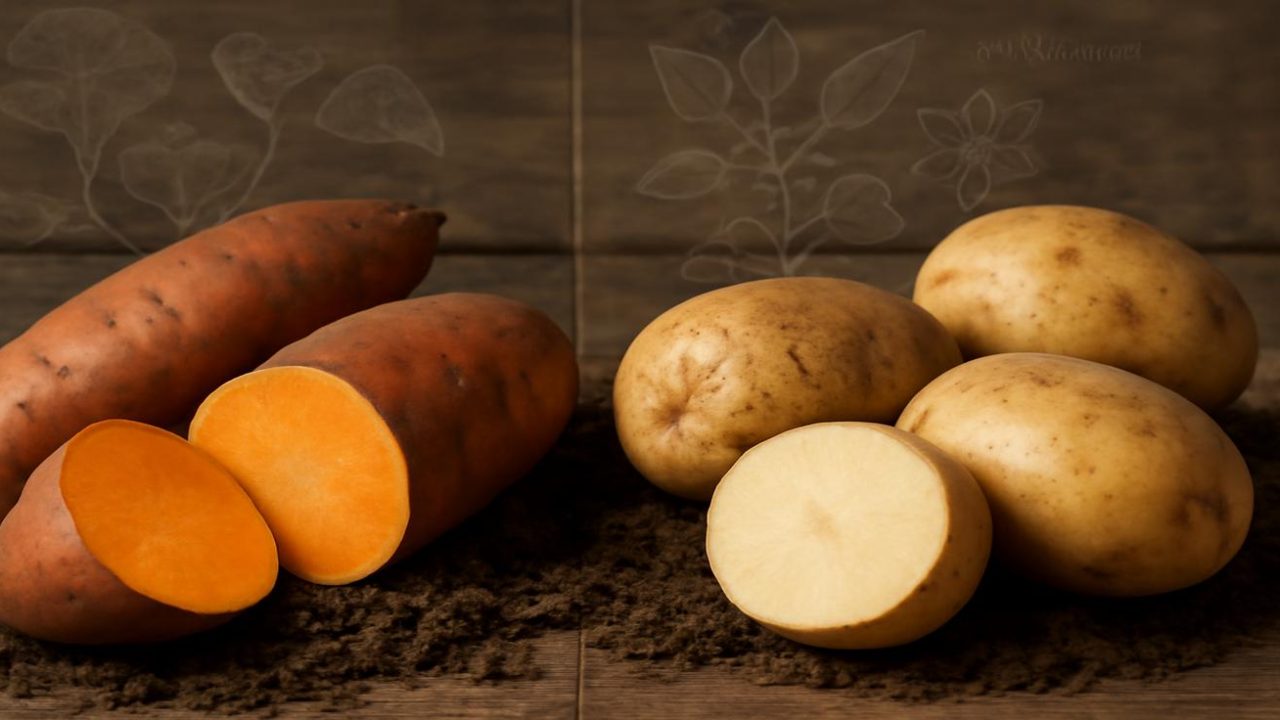
Sweet potatoes and regular potatoes share almost nothing except their name—and science reveals they’re more distantly related than humans are to chimpanzees. Despite sitting side by side in grocery stores and appearing in similar recipes, these two “potatoes” come from completely different plant families that split apart tens of millions of years ago.
The mix-up isn’t botanical—it’s purely linguistic. When European explorers encountered these underground treasures in the Americas, they weren’t trained botanists. They were hungry travelers amazed by any root that could be roasted, mashed, and stored for long journeys.
What followed was a collision of languages and cultures that would confuse cooks for centuries to come.

How Two Completely Different Plants Got the Same Name
The naming confusion started on the docks and in markets centuries ago. Indigenous farmers in the Andean highlands had been growing the regular potato (Solanum tuberosum) for thousands of years. Meanwhile, other Indigenous communities in tropical regions were cultivating sweet potatoes (Ipomoea batatas)—a completely different plant with heart-shaped leaves and trumpet-like flowers.
Languages tangled as these crops traveled. The Quechua word “papa” for potato mixed with the Taíno word “batata” for sweet potato. “Batata” drifted through Spanish and English, eventually becoming “potato” and “patata” in various languages.
To sailors and settlers, both were simply “those new edible roots.” One happened to be sweeter and orange, the other bland and pale. But in ship logs and kitchen conversations, the names blurred together long before anyone understood their true botanical identities.

The word stuck. The science took centuries to catch up.
The Surprising Family Trees That Prove They’re Not Related
When botanists organize plants, they don’t group them by taste or cooking methods. They arrange them by ancestry—flower structures, chromosomes, and genetic markers tell the real story.
Regular potatoes belong to the Solanaceae family, commonly called the nightshade family. Their relatives include tomatoes, eggplants, peppers, and tobacco. Many family members contain mild to deadly toxins, especially in leaves and unripe parts. Regular potatoes fit this pattern perfectly—their leaves, stems, and green tuber parts contain glycoalkaloids that can make you seriously ill.

Sweet potatoes come from an entirely different world. They’re members of Convolvulaceae, the morning glory family. If you’ve seen delicate purple or white morning glory flowers climbing a fence, you’ve met the sweet potato’s actual cousins.
Sweet potato plants are sprawling vines with funnel-shaped blossoms. Visually, they’re closer to ornamental flowering vines than anything we typically think of as a vegetable crop.
| Plant Characteristic | Regular Potato | Sweet Potato |
|---|---|---|
| Plant Family | Solanaceae (Nightshade) | Convolvulaceae (Morning Glory) |
| Scientific Name | Solanum tuberosum | Ipomoea batatas |
| Plant Type | Upright herb | Sprawling vine |
| Flower Shape | Star-shaped | Trumpet/funnel-shaped |
| Toxic Parts | Leaves, stems, green tubers | Generally non-toxic |
| Relatives | Tomatoes, peppers, eggplant | Morning glories, bindweed |
These two families split from a common ancestor tens of millions of years ago. By the time humans began farming, their evolutionary paths were deeply separate.

What You’re Actually Eating When You Eat Each “Potato”
The parts we eat tell completely different biological stories. When you slice open a regular potato, you’re cutting into a modified underground stem called a tuber. This swollen stem stores starch for the plant’s next growing season.
Sweet potatoes are storage roots—actual roots that have thickened to hold nutrients. They’re performing the same job as regular potatoes (energy storage) but using completely different plant anatomy.
This explains why they behave differently in your kitchen. Regular potatoes are loaded with starch and relatively little sugar. Sweet potatoes pack more natural sugars and different types of starch, which is why they caramelize beautifully when roasted.

The orange color in many sweet potatoes comes from beta-carotene, the same compound that makes carrots orange. Regular potatoes contain virtually none of this nutrient.
Why This Mix-Up Matters More Than You Think
Understanding these plants’ true relationships affects everything from nutrition to agriculture. Sweet potatoes are significantly more nutritious than regular potatoes, providing vitamin A, more fiber, and different mineral profiles.
From a growing perspective, they require completely different conditions. Regular potatoes prefer cooler climates and specific soil conditions. Sweet potatoes thrive in warm, humid environments and are much more drought-tolerant.

The confusion also matters for people with food allergies or sensitivities. Someone allergic to nightshades (regular potatoes, tomatoes, peppers) can typically eat sweet potatoes safely, since they’re from an unrelated plant family.
Plant breeders and agricultural researchers work with these crops differently because their genetics are so distinct. Techniques that work for improving regular potatoes won’t necessarily apply to sweet potatoes.
The Botanical Truth Hidden in Plain Sight
Next time you’re in the produce section, look closely at how different these plants really are. Regular potatoes have thin, papery skin and dense, uniform flesh. Sweet potatoes have thicker, more varied skin and flesh that ranges from white to deep orange to purple.

The shapes tell the story too. Regular potatoes tend toward round or oval shapes with shallow “eyes”—those are actually buds on the stem. Sweet potatoes are more twisted and irregular because they’re roots that grew around obstacles in the soil.
Even the way they sprout reveals their different natures. Regular potatoes grow new plants from their eyes. Sweet potatoes develop shoots called “slips” from their sides, more like how other root vegetables propagate.
This centuries-old case of mistaken identity shows how common names can obscure biological reality. In botany, appearances and cooking uses don’t determine relationships—DNA does.

Frequently Asked Questions
Are sweet potatoes and regular potatoes really less related than humans and chimpanzees?
Yes, their plant families split tens of millions of years ago, making them very distantly related despite the shared name.
Why do sweet potatoes and regular potatoes have similar names if they’re not related?
European explorers mixed up Indigenous words for these crops—Quechua “papa” and Taíno “batata”—creating linguistic confusion that persists today.
What plant families do these “potatoes” actually belong to?
Regular potatoes are nightshades (Solanaceae), related to tomatoes and peppers. Sweet potatoes are morning glories (Convolvulaceae), related to flowering vines.
Can people allergic to regular potatoes eat sweet potatoes?
Generally yes, since they’re from completely different plant families, but individual allergies vary and medical advice is recommended.
What parts of these plants are we actually eating?
Regular potatoes are modified underground stems (tubers), while sweet potatoes are thickened storage roots.
Do sweet potatoes and regular potatoes grow the same way?
No, they require different climates and growing conditions because they evolved separately and have different biological needs.











Leave a Comment