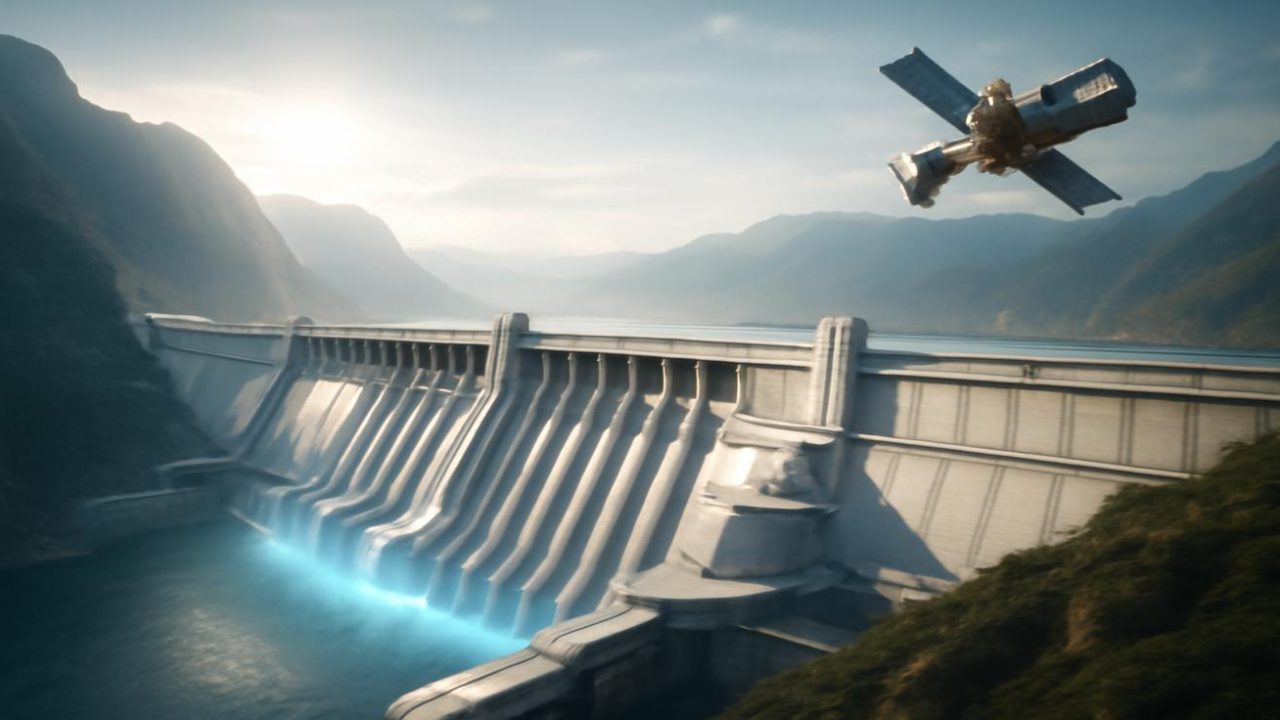
A viral claim sweeping social media suggests that China’s massive infrastructure projects are literally slowing down Earth’s rotation—and that NASA has confirmed this phenomenon. The reality behind these sensational headlines reveals a fascinating intersection of physics, engineering, and the microscopic ways human activity affects our planet.
The story emerged through the familiar pattern of modern viral content: dramatic thumbnails showing Earth with colossal structures, red circles demanding attention, and breathless narrators claiming NASA had to “confirm” China would slow the planet’s spin. But beneath the clickbait lies a more nuanced scientific truth about how massive projects can indeed affect Earth’s rotation in ways so small they’re measured in microseconds.
At the equator, you’re moving at over 1,600 kilometers per hour simply because Earth is spinning. You don’t feel this motion, but it’s constant and measurable. The question isn’t whether human projects can affect this spin—they can. The question is by how much, and whether the effects are anywhere near as dramatic as viral videos suggest.

The Physics Behind Earth’s Rotation Changes
Understanding how human projects might affect Earth’s spin requires grasping the concept of angular momentum—the same principle that allows figure skaters to spin faster by pulling their arms inward or slower by extending them outward. Earth behaves like that skater, with its “arms” made of oceans, mountains, ice caps, and everything else on the planet’s surface.
When you move massive amounts of material away from Earth’s center of rotation, you slightly change the planet’s moment of inertia. This can theoretically affect how fast Earth spins, though the changes are typically infinitesimal. Large dams that store water, glacial melt redistributing mass from ice caps to oceans, and even major earthquakes that reshape the crust can all have measurable effects on Earth’s rotation.
China has indeed constructed projects visible from space: the Three Gorges Dam, vast high-speed rail networks, and sprawling cities that glow like constellations in satellite imagery. These projects move enormous amounts of material and water, creating the theoretical conditions for affecting planetary rotation.

However, the leap from “visible from space” to “meaningfully slows Earth’s rotation” requires staggering amounts of mass and energy—far beyond what any current human project achieves.
What NASA Actually Confirmed About China’s Projects
The viral claims about NASA “confirming” China will slow Earth’s rotation stem from legitimate scientific observations that have been dramatically misrepresented. NASA and other scientific organizations do study how large-scale projects affect Earth’s rotation, but their findings paint a very different picture than social media suggests.
When China filled the reservoir behind the Three Gorges Dam—often cited in these viral stories—it did technically affect Earth’s rotation. Moving such a vast volume of water inland and upward slightly changed Earth’s moment of inertia, adding roughly 0.06 microseconds to the length of a day.

To put this in perspective: 0.06 microseconds equals six hundredths of a millionth of a second. This change is real and measurable with precise scientific instruments, but it’s far too small for humans to perceive. No one felt the Earth slow down. No clocks needed adjustment. The effect exists only in the realm of ultra-precise scientific measurement.
| Project Type | Effect on Day Length | Human Perception |
|---|---|---|
| Three Gorges Dam | +0.06 microseconds | Completely imperceptible |
| Major earthquakes | ±1-3 microseconds | Completely imperceptible |
| Glacial melting | Variable microseconds | Completely imperceptible |
The Scale Required for Noticeable Changes
For context, natural phenomena dwarf human-made effects on Earth’s rotation. Major earthquakes can shift the planet’s axis and change day length by several microseconds—still imperceptible to humans but orders of magnitude larger than dam construction.
The 2004 Indian Ocean earthquake that triggered devastating tsunamis shortened Earth’s day by 2.68 microseconds and shifted the planet’s axis by about 7 centimeters. Even this massive geological event, releasing energy equivalent to 23,000 atomic bombs, produced changes humans couldn’t feel.

Climate change effects on Earth’s rotation are also measurable. As ice sheets melt and redistribute water from polar regions to the oceans, this mass redistribution affects the planet’s spin. However, these changes occur over decades and remain in the microsecond range.
The viral stories claiming China is building projects that will noticeably slow Earth’s rotation fundamentally misunderstand the scales involved. While China’s infrastructure projects are genuinely massive by human standards, they’re microscopic compared to the forces required to meaningfully change planetary rotation.
Why These Stories Go Viral
The appeal of these stories lies in their combination of legitimate science, geopolitical intrigue, and the unsettling idea that human activity has reached planetary scales. There’s something both fascinating and disturbing about the notion that a single country could build something so large it affects the entire planet’s rotation.

The stories typically weave together real elements: China’s genuine massive infrastructure projects, NASA’s actual scientific measurements of rotation changes, and the valid physics of how mass redistribution affects planetary spin. However, they dramatically exaggerate the magnitude and significance of these effects.
YouTube videos and social media posts transform NASA’s careful scientific observations about microsecond changes into breathless claims about “slowing the planet.” The reality—that human projects can cause measurable but imperceptible changes to Earth’s rotation—gets lost in the dramatic presentation.
What This Means for Understanding Human Impact
While the viral claims about dramatically slowing Earth’s rotation are overblown, they do highlight genuine questions about humanity’s growing impact on planetary systems. Our species has indeed reached a scale where our activities affect global processes, from climate to ocean chemistry to, yes, even planetary rotation in minuscule ways.

The fact that the Three Gorges Dam measurably affected Earth’s rotation, even by microseconds, represents a milestone in human influence on planetary mechanics. We’ve built structures massive enough to register on instruments measuring the planet’s fundamental motions.
This reality sits somewhere between the viral claims of dramatic planetary effects and dismissing human impact entirely. We’re not slowing Earth’s rotation in any meaningful way, but we have reached scales where our largest projects interact with planetary physics in measurable ways.
Understanding these nuances matters for evaluating both sensational claims and legitimate concerns about human impact on Earth systems. The truth—that we can measure microscopic effects while remaining far from dramatic planetary changes—provides important context for discussions about human influence on our planet.

Frequently Asked Questions
Did NASA really confirm that China is slowing Earth’s rotation?
NASA confirmed that large projects like the Three Gorges Dam can affect Earth’s rotation by microseconds—changes too small for humans to perceive but measurable with scientific instruments.
How much did the Three Gorges Dam actually slow Earth’s rotation?
The dam added approximately 0.06 microseconds to the length of a day, which equals six hundredths of a millionth of a second.
What would it take to noticeably slow Earth’s rotation?
It would require moving mass on scales far beyond any current human capability, involving forces comparable to major geological events or climate changes occurring over long time periods.

Are there other human activities that affect Earth’s rotation?
Any large-scale mass redistribution can theoretically affect rotation, but the effects remain in the microsecond range and are typically overshadowed by natural phenomena like earthquakes and climate processes.
Why do these stories about China slowing Earth’s rotation spread so widely?
They combine real scientific phenomena with dramatic presentation, creating compelling but misleading narratives about human impact on planetary systems.
Should we be concerned about human projects affecting Earth’s rotation?
Current effects are scientifically interesting but practically negligible, though they do represent humanity’s growing influence on planetary-scale processes in measurable ways.











Leave a Comment