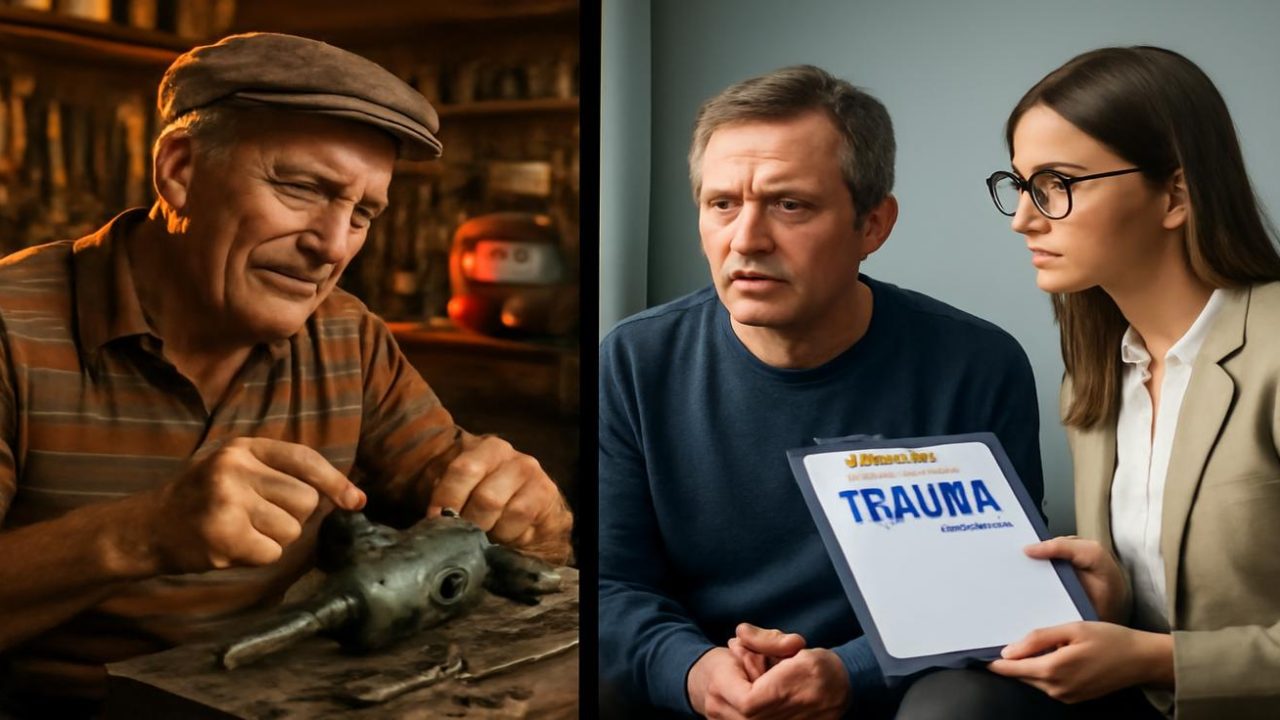
A generation raised on self-reliance and “figure it out yourself” parenting is discovering that modern psychology has new names for their most prized character traits. What they’ve long considered strengths—work ethic, independence, reliability—are increasingly being reframed as potential trauma responses by mental health professionals and wellness culture.
The shift represents a collision between two worldviews: one that celebrates grit forged through adversity, and another that examines whether that same grit might signal unhealed wounds. For millions of Americans born in the 1960s and 1970s, this reframing feels like having their life’s operating manual suddenly questioned.
The tension plays out in therapy offices, social media feeds, and casual conversations where the language of trauma—triggers, attachment styles, nervous system responses—meets a generation that learned early to handle problems without much emotional vocabulary or support.

When Independence Gets Reclassified as a Disorder
The “latchkey generation” grew up in an era where children routinely walked home to empty houses, heated up their own dinners, and managed their homework without supervision. Parents who lived through economic uncertainty, Cold War anxiety, and shifting social norms often had little bandwidth for emotional processing.
These children learned essential skills: self-sufficiency, emotional regulation under pressure, and the ability to function without constant validation or support. They carried house keys on shoelaces, followed notes left on refrigerators, and understood that showing up was non-negotiable regardless of how they felt.
Now, decades later, trauma-informed psychology has developed clinical terms for many of these adaptive behaviors. What was once praised as “not needing anyone” might now be labeled “hyper-independence.” A strong work ethic could be reframed as “flight response” or avoidance of difficult emotions.

The rebranding extends across multiple traits that defined generational identity:
| Traditional Description | Contemporary Psychological Framing |
|---|---|
| Strong work ethic | Workaholism, flight response, emotional avoidance |
| Self-reliance | Hyper-independence, fear of vulnerability |
| Good under pressure | Nervous system stuck in fight-or-flight |
| Doesn’t complain | Emotional suppression, fawn response |
| Always helps others | People-pleasing, codependency |
The Cultural Divide Between Resilience and Recovery
The psychological reframing doesn’t occur in a vacuum. It reflects broader cultural shifts toward emotional awareness, mental health advocacy, and trauma-informed approaches to human behavior. Younger generations, raised with more emotional vocabulary and therapeutic concepts, often embrace these frameworks as validating and healing.
But for those who built their identities around traits like stoicism and self-sufficiency, the new language can feel invalidating. Their survival mechanisms—which helped them navigate economic recessions, family instability, and social upheaval—are now sometimes pathologized rather than honored.

The friction intensifies in workplace settings, family dynamics, and social interactions where different generational approaches to emotional processing clash. What one person calls “being dramatic,” another calls “emotional intelligence.” What one views as “handling your business,” another might see as “avoiding feelings.”
This generational divide reflects competing narratives about human adaptation: whether difficult childhoods primarily create resilience or trauma, and whether behaviors that ensure survival should be celebrated or examined for underlying wounds.
Why the Stakes Matter Beyond Personal Identity
The debate over trauma versus resilience carries implications beyond individual identity. It influences parenting approaches, workplace cultures, educational policies, and mental health treatment protocols. How society understands adaptation to adversity shapes everything from therapy techniques to corporate wellness programs.

For the generation caught in the middle, the stakes feel particularly high. Many spent decades building careers, raising families, and contributing to communities using the very traits now being questioned. The suggestion that their cornerstone virtues might be symptoms creates existential uncertainty about their life’s foundation.
The reframing also raises questions about the relationship between individual pathology and social conditions. If an entire generation developed similar coping mechanisms in response to historical circumstances—economic instability, changing family structures, limited emotional support—are those responses personal trauma or reasonable adaptation to social realities?
Some argue that pathologizing resilience traits undermines the legitimate strength and wisdom that emerged from difficult circumstances. Others contend that acknowledging trauma responses doesn’t negate their adaptive value but allows for greater self-understanding and healing.

Navigating Between Validation and Pathology
The challenge for individuals navigating this cultural shift involves distinguishing between helpful insight and unnecessary pathologizing. Modern psychology offers valuable tools for understanding how early experiences shape adult behavior patterns, emotional regulation, and relationship dynamics.
At the same time, not every survival mechanism requires therapeutic intervention. Some traits that developed during challenging childhoods continue serving people well in adult life without causing distress or dysfunction.
The most productive approach may involve holding multiple truths simultaneously: acknowledging both the genuine strength that emerged from adversity and any areas where old coping mechanisms might benefit from updating. This allows for growth and healing without requiring wholesale rejection of hard-earned resilience.

Mental health professionals increasingly recognize the importance of cultural competence when working with different generational approaches to emotional processing. Effective therapy honors both resilience and vulnerability, strength and healing needs.
What This Means for Moving Forward
The conversation about trauma versus resilience will likely continue evolving as psychology develops more nuanced understandings of human adaptation. Rather than choosing between celebration and pathology, the field may move toward frameworks that honor both survival wisdom and healing opportunities.
For individuals processing these competing narratives, the key involves maintaining agency over their own story. External frameworks—whether traditional or therapeutic—serve best as tools for understanding rather than definitive judgments about personal worth or health.

The generational divide may ultimately benefit from increased dialogue that respects different approaches to emotional processing while remaining open to insights from evolving psychological understanding. This allows for learning across generational lines without requiring anyone to abandon their core identity or survival wisdom.
Frequently Asked Questions
What behaviors are being reframed as trauma responses?
Common traits include excessive work ethic, hyper-independence, difficulty accepting help, people-pleasing, emotional suppression, and functioning well under pressure.
Does this mean my coping skills are unhealthy?
Not necessarily. Many adaptive behaviors serve people well throughout their lives. The question is whether they cause distress or interfere with relationships and well-being.

Why is this happening now?
Increased awareness of trauma’s impact, expanded psychological research, and cultural shifts toward emotional awareness have created new frameworks for understanding behavior patterns.
Should I seek therapy if my strengths are being called trauma responses?
Only if you’re experiencing distress, relationship difficulties, or want to explore your patterns. Therapy can be helpful for understanding without requiring you to view your traits as pathological.
How can different generations understand each other better?
By recognizing that both resilience and emotional awareness have value, and that different historical contexts shaped different adaptive strategies.
Is there a middle ground between these perspectives?
Yes. Many professionals now advocate for approaches that honor both survival wisdom and opportunities for healing, without pathologizing necessary adaptations to difficult circumstances.









Leave a Comment