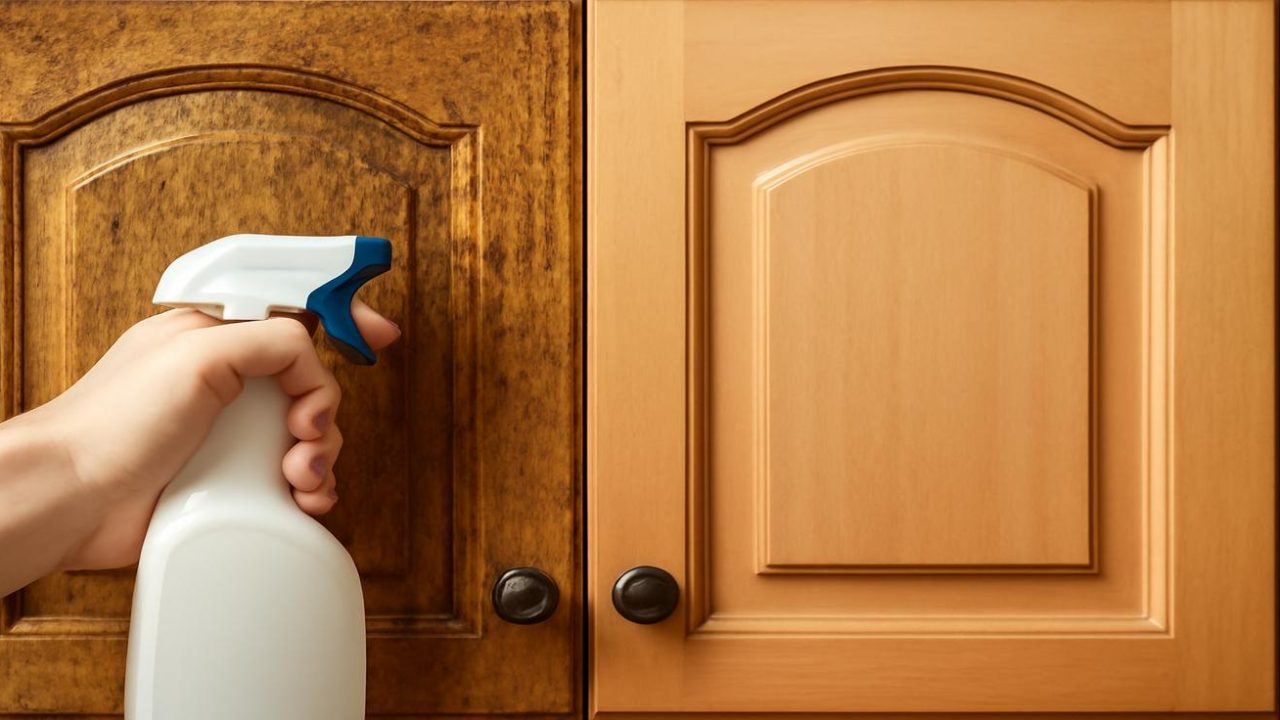
Ezra stared at the grimy kitchen cabinets in his grandmother’s house, running his fingers along the sticky film that had built up over decades of cooking. “There’s got to be something that’ll cut through this mess,” he muttered, opening cabinet after cabinet in search of a miracle cleaner.
His grandmother chuckled from her wheelchair. “Check under the sink, dear. There’s an old bottle of something I used to swear by.”
What Ezra found wasn’t some fancy cleaning product with bold marketing claims. It was a simple bottle of white vinegar – the same stuff his grandmother had been using to clean her cabinets for over forty years.

The Kitchen Cabinet Game-Changer Hiding in Plain Sight
While most of us reach for expensive commercial cleaners or harsh chemicals to tackle grimy kitchen cabinets, there’s a humble liquid sitting in nearly every pantry that outperforms them all: white vinegar.
This isn’t just another cleaning hack that sounds good on paper. White vinegar’s acidic properties make it a powerhouse against the specific types of grime that plague kitchen cabinets – cooking grease, food splatters, fingerprints, and that mysterious sticky film that seems to appear out of nowhere.
The beauty of vinegar lies in its simplicity and effectiveness. It cuts through grease naturally without leaving behind harsh chemical residues that can damage cabinet finishes over time.
— Patricia Rodriguez, Professional House Cleaner

Unlike commercial degreasers that can strip cabinet finishes or leave streaky residues, vinegar works gently while delivering impressive results. The acetic acid breaks down grease and grime at the molecular level, making even the stickiest buildup wipe away with minimal scrubbing.
How to Transform Your Cabinets with This Simple Method
The process couldn’t be more straightforward, but the details matter when it comes to getting professional-level results.
What You’ll Need:

- White vinegar (5% acidity)
- Warm water
- Microfiber cloths
- Small spray bottle
- Soft-bristled toothbrush (for detailed areas)
| Cabinet Material | Vinegar-to-Water Ratio | Application Method |
|---|---|---|
| Painted Wood | 1:2 (vinegar:water) | Light spray, immediate wipe |
| Laminate | 1:1 (vinegar:water) | Spray and let sit 30 seconds |
| Natural Wood | 1:3 (vinegar:water) | Damp cloth application only |
| Metal Hardware | Full strength vinegar | Apply with cloth, rinse well |
Start by removing everything from your cabinets and giving them a quick dusting. Mix your vinegar solution according to your cabinet material, then work from top to bottom in small sections.
I’ve seen people scrub for hours with commercial cleaners and get mediocre results. Then they try vinegar and can’t believe how easily years of buildup just melts away.
— Marcus Thompson, Kitchen Renovation Specialist
For stubborn spots, let the vinegar solution sit for a minute before wiping. The acid needs time to break down heavy grease deposits, but you’ll see the difference immediately.
Why This Method Beats Expensive Alternatives
Commercial kitchen cleaners can cost anywhere from $8 to $15 per bottle, and many contain harsh chemicals that require ventilation and careful handling. A gallon of white vinegar costs under $3 and can clean your entire kitchen multiple times over.
But the real advantage goes beyond cost savings. Vinegar leaves behind a naturally antimicrobial surface that continues working even after you’ve finished cleaning. It also won’t damage cabinet hardware, handles, or hinges the way some aggressive cleaners can.
Additional Benefits of the Vinegar Method:

- Eliminates odors instead of masking them
- Safe around food preparation areas
- Won’t cause respiratory irritation
- Biodegradable and environmentally friendly
- Works on cabinet interiors and exteriors
- Removes water spots and mineral deposits
The biggest mistake I see homeowners make is thinking they need different products for different types of grime. Vinegar handles grease, soap scum, water spots, and general dirt all in one go.
— Jennifer Walsh, Home Organization Expert
Real Results That Speak for Themselves
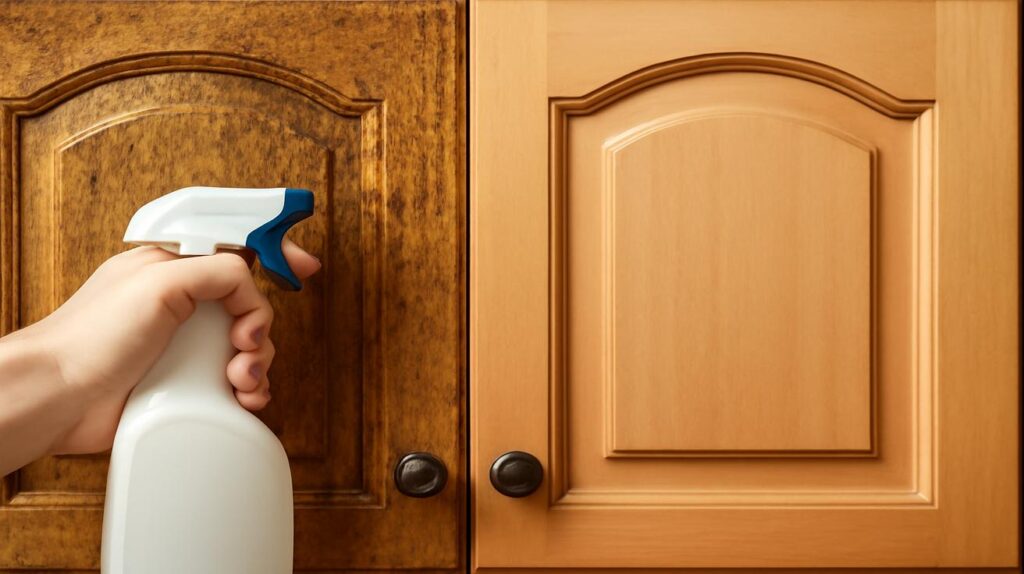
The transformation isn’t just about cleanliness – it’s about restoring your cabinets to their intended appearance. That sticky film that makes cabinet doors feel rough? Gone. The grease buildup around handles that attracts more dirt? Eliminated.
Many homeowners report that their cabinets feel smoother and look shinier after vinegar cleaning than they have in years. The acid gently removes the microscopic buildup that dulls cabinet surfaces, revealing the original finish underneath.

For cabinets that haven’t been properly cleaned in months or years, the difference can be dramatic. What looked like permanent staining often turns out to be removable grime that just needed the right approach.
I had clients ready to replace their kitchen cabinets because they looked so dingy and worn. After a thorough vinegar cleaning, those same cabinets looked almost new again.
— David Chen, Interior Design Consultant
The method works equally well on cabinet interiors, where food spills and dust can create their own cleaning challenges. A monthly vinegar wipe-down keeps shelves fresh and prevents the buildup that leads to stubborn cleaning jobs later.

Making This Your Go-To Cabinet Care Routine
Once you’ve experienced the effectiveness of vinegar cleaning, incorporating it into your regular kitchen maintenance becomes second nature. A weekly spot-cleaning with diluted vinegar prevents heavy buildup and keeps your cabinets looking consistently clean.
For busy households, keeping a spray bottle of vinegar solution under the kitchen sink makes quick touch-ups effortless. A few sprays and a quick wipe after cooking messy meals prevents stains from setting and reduces the need for deep cleaning sessions.
The key is consistency rather than intensity. Regular light cleaning with vinegar prevents the kind of heavy grime buildup that requires aggressive scrubbing and potentially damaging chemicals.

FAQs
Will vinegar damage my cabinet finish?
When properly diluted, vinegar is safe for most cabinet finishes and is actually gentler than many commercial cleaners.
How often should I clean my cabinets with vinegar?
Weekly spot cleaning and monthly deep cleaning will keep most cabinets in excellent condition.
Can I use apple cider vinegar instead of white vinegar?
White vinegar is preferred because it won’t leave any color residue, but apple cider vinegar works in a pinch.
What if my cabinets still smell like vinegar after cleaning?
The vinegar smell dissipates within minutes, but you can speed the process by wiping with a damp cloth.
Is this method safe around children and pets?
Yes, vinegar is non-toxic and safe for homes with children and pets, unlike many commercial cleaners.
Can I use this method on cabinet hardware too?
Absolutely – vinegar removes fingerprints and water spots from handles and hinges without damaging metal finishes.









Leave a Comment