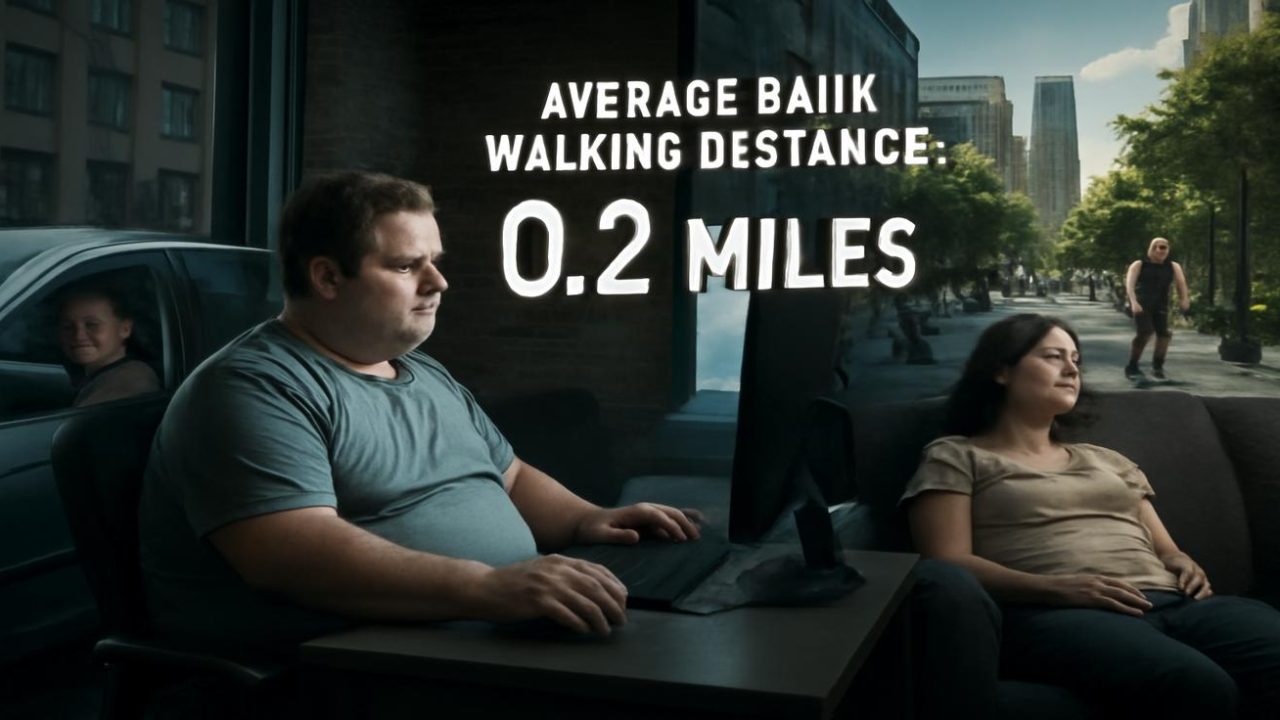
The average city dweller now walks less than 3,000 steps a day — and some surveys show numbers dipping closer to 2,000 steps. That’s roughly the distance you’d cover shuffling from a small apartment to an elevator, into a car or subway, up another elevator, then back again.
For a species that evolved to roam savannas and migrate with the seasons, we’ve somehow engineered urban life where our legs have become almost optional. The stark reality of modern city living has quietly stripped away one of humanity’s most fundamental activities, with consequences that extend far beyond simple fitness metrics.
This dramatic shift represents a complete reversal from our evolutionary past and even recent history, creating what researchers describe as a public health crisis hiding in plain sight.

How Cities Engineered Movement Out of Daily Life
The transformation didn’t happen overnight. Modern urban design has systematically removed walking from the equation of daily survival, replacing it with a conveyor belt of seated experiences.
Consider the typical weekday routine: wake up, pad a few steps to the bathroom and kitchen, then drop into a chair to scroll through emails. The commute becomes a seated affair through ride-shares, cars, trains, or buses. At work, another series of chairs awaits — desk chair, meeting chair, lunch chair, break room couch.
This isn’t about personal laziness. The architecture of modern cities actively discourages walking through design choices that prioritize efficiency over movement. Food gets delivered to doors, groceries arrive via anonymous vans, meetings happen on screens instead of across town, and friendships maintain themselves through group chats.

Every few years, cities add another layer of frictionless convenience, and each layer steals hundreds of steps from daily routines. What feels like progress in productivity terms creates a fundamental mismatch with human biology.
Humans once walked 10 to 15 kilometers daily as hunter-gatherers. Even mid-20th century urbanites regularly clocked 8,000 to 10,000 steps just completing routine tasks. Now, in many dense cities, large numbers of people barely scrape together a third of that amount.
The Physical Toll of Sedentary City Living
Walking isn’t merely exercise in the traditional gym sense — it’s a constant background signal to practically every system in the human body. When that signal disappears, the consequences cascade through multiple biological functions.

Urban bodies are adapting to this new reality, but not in beneficial ways. City dwellers increasingly struggle with basic movements: rising from low benches, climbing subway stairs without shallow breathing, or managing knee pain while waiting for buses.
| Body System | What Regular Walking Does | Impact of Chronic Low Walking |
|---|---|---|
| Muscles & Joints | Maintains leg strength, joint lubrication, posture, balance | Weakness, stiffness, back and knee pain, higher fall risk |
| Heart & Metabolism | Supports healthy blood pressure, blood sugar, cholesterol, weight | Higher risk of heart disease, diabetes, weight gain, fatigue |
| Brain & Mood | Boosts blood flow to brain, improves mood and focus | Foggy thinking, anxiety, low mood, poorer stress resilience |
| Long-Term Health | Linked to longer life and better aging | Higher risks of multiple chronic diseases and earlier mortality |
Leg muscles function as a second heart, helping pump blood back up from the lower extremities. When this muscular pump weakens from disuse, circulation suffers throughout the body. The ripple effects touch everything from cognitive function to immune system strength.
Why This Crisis Affects Every City Dweller
The walking deficit isn’t limited to obviously sedentary populations. Even people who consider themselves active often discover their daily step counts fall dramatically short of basic health recommendations.

Office workers face the most dramatic challenges, but the issue extends across urban professions. The combination of long commutes, desk-based work, and convenience-oriented city design creates movement deserts even in dense, walkable neighborhoods.
Public health researchers note that cities have essentially treated walking as an inefficiency to be eliminated, similar to cutting unnecessary emails from workflows. While this approach makes sense for digital productivity, human bodies don’t update like software to match urban logic.
The disconnect becomes particularly pronounced when people attempt to compensate with intensive gym sessions or weekend exercise binges. These efforts, while beneficial, can’t fully replace the steady, low-level movement that human physiology expects throughout each day.

Mental health implications compound the physical problems. Regular walking has historically served as natural stress relief, thinking time, and mood regulation. Cities that eliminate walking often see corresponding increases in anxiety, depression, and cognitive fatigue among residents.
The Broader Urban Health Implications
The sub-3,000-step reality isn’t an outlier anymore — in many office-heavy neighborhoods, it’s becoming the standard. This shift represents one of the most dramatic changes in human movement patterns in recorded history, accomplished in just a few decades.
Healthcare systems are beginning to grapple with the long-term costs of populations that barely walk. Conditions once associated primarily with aging now appear earlier and more frequently in urban populations, particularly those related to cardiovascular health, bone density, and metabolic function.

The economic implications extend beyond individual health costs. Reduced walking correlates with decreased social interaction, lower local business engagement, and diminished neighborhood connectivity — factors that traditionally contributed to urban vitality and community resilience.
Some cities are recognizing the problem and implementing design changes to encourage more walking, but these efforts face resistance from established infrastructure and ingrained behavioral patterns that prioritize speed and convenience over movement.
What This Means for Urban Planning
The walking crisis forces a fundamental reconsideration of what makes cities successful. Traditional metrics focused on efficiency, convenience, and economic productivity, but the health data suggests these priorities may be undermining the basic biological needs of urban populations.

Urban planners increasingly face pressure to balance convenience with movement opportunities, creating infrastructure that naturally incorporates walking into daily routines rather than eliminating it. This might mean rethinking everything from building design to transportation networks.
The challenge lies in retrofitting existing cities built around automobile and digital convenience cultures. Adding walking back into urban life requires more than installing sidewalks — it demands reimagining how people move through and interact with city spaces on a fundamental level.
Frequently Asked Questions
How many steps should people walk daily for good health?
Health recommendations typically suggest 8,000 to 10,000 steps daily, though even modest increases from very low baselines can provide significant benefits.

Is this walking problem unique to certain types of cities?
The issue appears most pronounced in office-heavy urban neighborhoods, but surveys show declining step counts across various city types as convenience infrastructure expands.
Can gym workouts compensate for not walking during the day?
While exercise provides important benefits, it can’t fully replace the steady, low-level movement that human physiology expects throughout each day for optimal function.
What health problems are most directly linked to not walking enough?
The most immediate impacts include weakened leg muscles, poor circulation, back and knee pain, increased fall risk, and higher rates of heart disease and diabetes.
Are there mental health effects from walking too little?
Yes, regular walking traditionally serves as natural stress relief and mood regulation, so cities that eliminate walking often see increases in anxiety, depression, and cognitive fatigue.
How quickly did this change in walking habits happen?
The shift has occurred over just a few decades, representing one of the most dramatic changes in human movement patterns in recorded history.











Leave a Comment