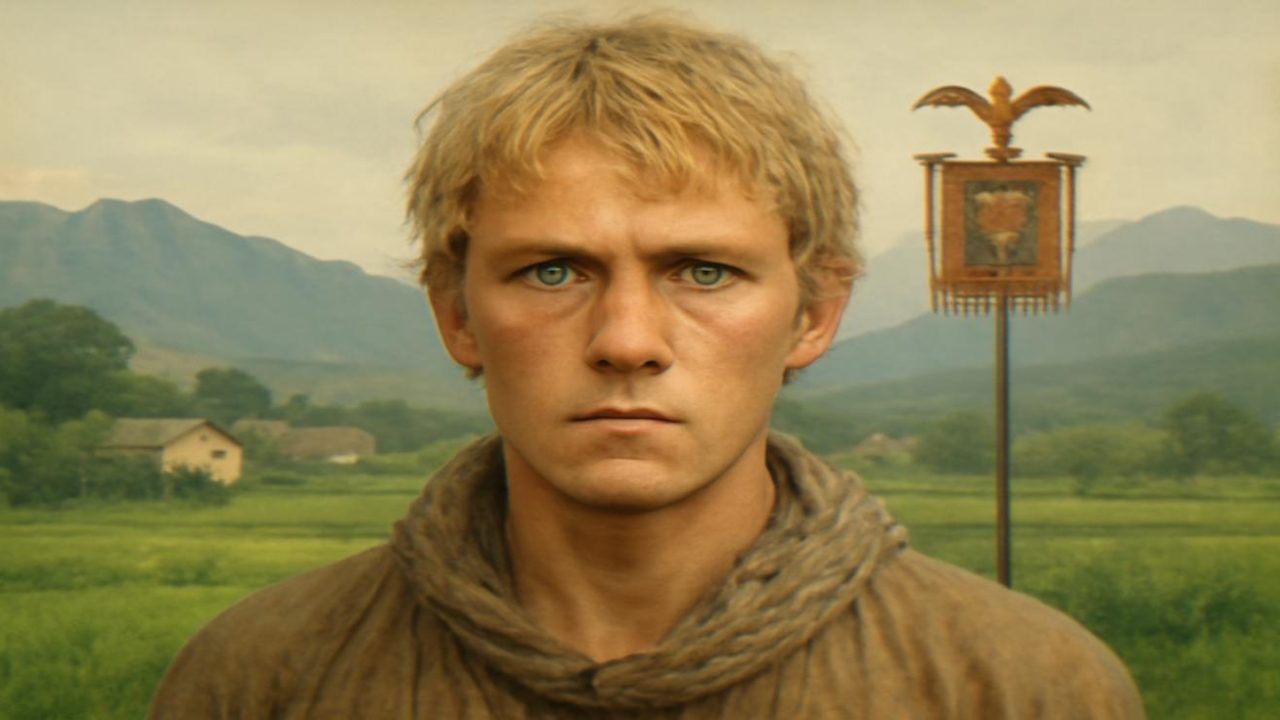
A small village in China’s remote Gansu province holds one of history’s most intriguing mysteries: residents with green eyes, fair hair, and European features who may be descendants of Roman soldiers lost to time over 2,000 years ago. DNA evidence has revealed traces of European ancestry among the locals, keeping alive a theory that connects ancient Rome to rural China through an extraordinary tale of survival.
The village of Liqian sits along the historic Hexi Corridor, where the modern world feels distant and legends seem more plausible. Here, among mud-brick walls and dusty streets, faces that don’t match typical northwestern Chinese features have sparked decades of speculation about a connection to one of Rome’s most famous military disasters.
What makes this story remarkable isn’t just the physical evidence, but how a forgotten chapter of East-West history may have quietly survived in one of the world’s most isolated places.

The Roman Legion That Vanished Into History
The mystery begins with a catastrophic battle fought thousands of kilometers away. In 53 BCE, Roman general Crassus led his legions into the Battle of Carrhae against Parthian forces in what is now modern-day Turkey. The defeat was devastating for Rome, with thousands of soldiers captured by the victorious Parthians.
Ancient sources suggest these Roman prisoners were relocated eastward by their captors, possibly serving as military colonists or mercenaries. As they moved further from the empire that once commanded them, they may have traveled along trade routes that eventually led to China’s western frontiers.
Chinese historical records from the Han dynasty provide a tantalizing clue. They describe encountering soldiers who fought in a distinctive “fish-scale” formation—a pattern some historians believe could be the Roman testudo, where legionnaires locked their shields together like a tortoise shell for protection.

After this brief mention in Chinese chronicles, the trail goes cold. Centuries passed with no further record of these mysterious Western soldiers, leaving their fate to speculation until modern times brought new attention to a remote village with an unusual name.
Why Liqian Became the Center of Ancient DNA Research
The village’s name itself provides a crucial link to the theory. “Liqian” (骊靬) was used in Han-dynasty texts to refer to a distant Western land, creating a linguistic connection that researchers found impossible to ignore.
But it’s the physical evidence that has drawn the most attention. Visitors to Liqian consistently report seeing residents whose appearance stands out dramatically from the surrounding population:

- Children with sandy hair and green or light-colored eyes
- Adults with prominent noses and deep-set eyes characteristic of European ancestry
- Facial bone structure that differs markedly from typical Han Chinese features
- Light brown or blonde hair that persists even among older residents
These observations led to formal DNA testing, which confirmed the presence of European genetic markers in the local population. While the results don’t definitively prove Roman ancestry, they do support the possibility that Western peoples settled in this region centuries ago.
The genetic evidence has transformed Liqian from a curiosity into a legitimate subject of historical research, though the village remains divided between embracing its possible Roman heritage and maintaining focus on daily life in rural China.
Living With a 2,000-Year-Old Mystery
For Liqian’s residents, the international attention brings both pride and complications. The theory of Roman ancestry has become part of their identity, yet many villagers remain focused on the practical challenges of farming and survival in China’s harsh northwestern climate.

The village landscape tells its own story of adaptation and endurance. The Hexi Corridor’s brown and ochre terrain stretches endlessly, while narrow streets wind between traditional buildings where families have lived for generations. Modern tour buses now arrive carrying visitors eager to see the “Roman Chinese,” creating an odd juxtaposition between ancient mystery and contemporary curiosity.
Local children play beside the same mud-brick walls their ancestors may have built, while older residents work fields that could have been cultivated by Roman descendants for nearly two millennia. The persistence of European physical features across so many generations suggests a founding population large enough to maintain genetic diversity.
| Historical Element | Evidence Supporting Roman Theory | Alternative Explanations |
|---|---|---|
| Village Name | Han texts used “Liqian” for Western lands | Coincidental naming |
| Physical Features | European characteristics in isolated population | Other Silk Road traders or travelers |
| DNA Evidence | Confirmed European genetic markers | Multiple sources of Western ancestry |
| Military Formation | Chinese records of “fish-scale” fighting style | Independent tactical development |
What Modern Research Reveals About Ancient Connections
The Liqian theory represents more than just speculation about lost Roman soldiers. It highlights how the ancient world was far more connected than many people realize, with trade routes, military campaigns, and population movements creating unexpected cultural exchanges.

DNA analysis has become increasingly sophisticated, allowing researchers to trace population movements with greater accuracy. The European genetic markers found in Liqian residents could indeed trace back to Roman prisoners, but they might also reflect other Western peoples who traveled the Silk Road or settled in Central Asia.
What remains undeniable is that some population of European ancestry established itself in this remote corner of China and maintained distinct physical characteristics across dozens of generations. Whether these were Romans, other Mediterranean peoples, or Central Asian groups with European heritage, their survival represents a remarkable story of cultural persistence.
The village continues to attract researchers interested in both genetics and ancient history. Each new study adds pieces to the puzzle, though definitive proof of Roman ancestry remains elusive.

The Enduring Appeal of East-Meets-West Stories
Liqian’s story resonates because it challenges assumptions about ancient isolation and cultural boundaries. The idea that Roman legionnaires could have ended up in rural China, established families, and passed down their heritage for 2,000 years captures imaginations worldwide.
The village has become a symbol of how history’s grand narratives often hide in unexpected places. While archaeologists search for dramatic ruins and artifacts, the most compelling evidence of ancient connections might be walking the streets of a small farming community, carrying the genetic legacy of civilizations that seemed worlds apart.
Whether or not DNA testing ever conclusively proves Roman ancestry, Liqian has already secured its place in the ongoing effort to understand how ancient peoples moved, adapted, and survived across vast distances and cultural divides.

Frequently Asked Questions
What happened to the Roman soldiers captured at the Battle of Carrhae?
Ancient sources suggest thousands were taken prisoner by Parthian forces, but their ultimate fate remains unknown, with some theories proposing they were relocated eastward as military colonists.
Has DNA testing definitively proven the residents of Liqian are descended from Romans?
DNA analysis has confirmed European genetic markers in the local population, but this doesn’t conclusively prove Roman ancestry as opposed to other Western peoples who may have settled in the region.
Why do some Liqian residents have European features?
The persistence of traits like green eyes, fair hair, and distinctive facial structure across many generations suggests an ancestral population with European heritage established itself in the village centuries ago.

What evidence supports the Roman theory beyond physical appearance?
The village name “Liqian” matches Han-dynasty terms for Western lands, and Chinese historical records describe encountering soldiers using formations possibly similar to Roman military tactics.
Are there other explanations for the European ancestry in Liqian?
The genetic markers could trace to various Western peoples who traveled the Silk Road, including other Mediterranean groups, Central Asian populations, or traders and settlers from different periods.
How has the Roman theory affected life in Liqian village?
The international attention has brought both pride and tourism to the community, though many residents remain focused on traditional farming and daily life rather than their possible ancient heritage.











Leave a Comment