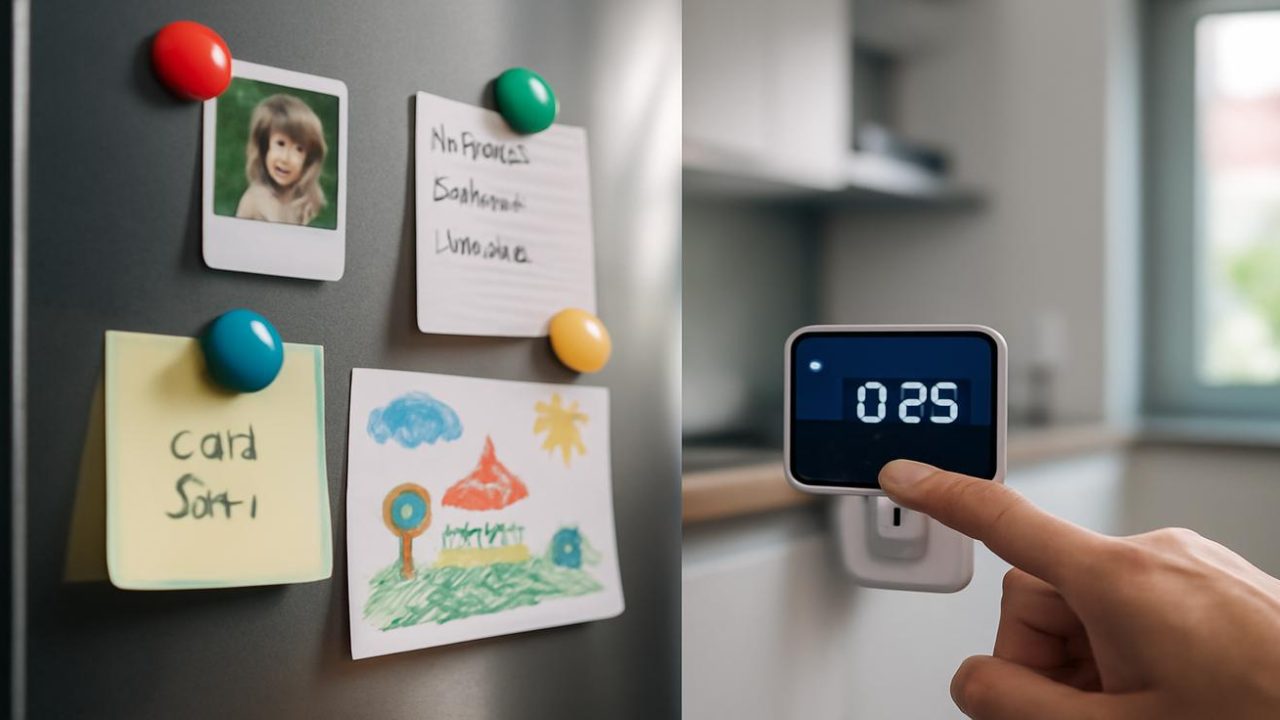
For decades, homeowners have wondered whether those colorful magnets covering their refrigerator doors are secretly driving up their electricity bills. The persistent myth has led some families to ban fridge magnets entirely, convinced that every souvenir magnet and grocery list was forcing their appliance to work harder.
Now Bosch has finally addressed this widespread concern with a clear explanation of what actually affects your refrigerator’s energy consumption—and what doesn’t. The answer might surprise anyone who’s ever eyed their magnet collection with suspicion.
The confusion stems from a fundamental misunderstanding of how refrigerators work and which magnets actually matter for your appliance’s efficiency.

How Your Refrigerator Actually Uses Energy
Your refrigerator doesn’t create cold air—it moves heat from inside the unit to the outside. This process relies on a compressor, which acts like the heart of the system, pushing refrigerant through a network of coils and changing it from liquid to gas and back again.
The compressor is where most of your fridge’s electricity consumption happens. It runs whenever the internal temperature rises above the set point, working to maintain that stable, cold environment your food needs.
The only thing that makes your compressor work harder is when warm air gets inside the refrigerator compartment. This happens when the door is opened frequently, when hot food is placed inside, or when the door doesn’t seal properly.

That last point is crucial—and it’s where magnets actually do play a role in your energy bill.
The Two Types of Magnets That Matter
Not all magnets are created equal when it comes to refrigerator efficiency. There are actually two completely different magnetic systems at work on your fridge, and only one of them affects your electricity consumption.
| Magnet Type | Location | Impact on Energy Use |
|---|---|---|
| Door gasket magnets | Built into door seal | Critical for efficiency |
| Decorative magnets | Outer door surface | No measurable impact |
The magnetic door gasket is the flexible strip that runs around the entire perimeter of your refrigerator door. When you close the door, you feel that gentle resistance—that’s the magnetic seal pulling the door tight against the frame.

This built-in magnetic system is essential for energy efficiency. A weak or damaged gasket allows cold air to leak out continuously, forcing the compressor to run more frequently to maintain the proper temperature.
Decorative magnets, on the other hand, are simply passengers. They attach to the outer steel surface of the door but have no connection to the refrigeration system inside.
Why the Myth Persists
The confusion likely stems from the fact that refrigerators do use magnets for an essential function—just not the ones people can see. When someone notices their electricity bill rising, it’s natural to look for culprits, and those colorful magnets are highly visible.

Some people also worry that magnets might interfere with the refrigerator’s electrical components. Modern appliances are designed to handle the small magnetic fields created by typical fridge magnets without any performance issues.
The magnetic field strength of a typical souvenir magnet or photo holder is nowhere near powerful enough to affect the compressor, thermostat, or other electrical components housed inside the insulated walls of the refrigerator.
What Actually Drives Up Your Refrigerator’s Energy Costs
If decorative magnets aren’t the problem, what is? Several factors have a real impact on how hard your refrigerator works and how much electricity it consumes.

- Damaged door seals: Check the magnetic gasket around your door for cracks, tears, or areas where it doesn’t make full contact
- Frequent door opening: Every time the door opens, warm air rushes in and the compressor has to work to cool it down
- Overpacking: Blocking air vents inside the fridge prevents proper circulation
- Poor ventilation: Dust buildup on condenser coils or inadequate clearance around the unit
- Temperature settings: Setting the temperature lower than necessary wastes energy
- Age of the appliance: Older refrigerators are significantly less energy-efficient than modern models
The door seal deserves special attention because it’s both critical and commonly overlooked. You can test your gasket by closing the door on a dollar bill—if you can pull it out easily, the seal may need attention.
Location matters too. A refrigerator placed next to an oven or in direct sunlight has to work harder to maintain cool temperatures, regardless of how many magnets decorate its surface.
The Real Energy Savings Opportunities
Instead of removing magnets, focus on maintenance and habits that actually affect energy consumption. Regular cleaning of the condenser coils can improve efficiency by up to 6%, while replacing worn door gaskets can reduce energy use even more dramatically.

Simple behavioral changes also make a difference. Deciding what you want before opening the door, letting hot leftovers cool before refrigerating them, and keeping the fridge reasonably full (but not packed) all help reduce energy consumption.
For households concerned about electricity costs, upgrading to an Energy Star certified refrigerator typically saves more money over time than any amount of magnet removal ever could.
Modern refrigerators use roughly 75% less energy than models from the 1970s, making replacement the most effective way to cut refrigeration costs for anyone with an older appliance.

Frequently Asked Questions
Do fridge magnets actually increase electricity bills?
No, decorative magnets on the outside of your refrigerator door have no measurable impact on energy consumption.
Which magnets do affect refrigerator efficiency?
Only the magnetic strips built into the door gasket affect efficiency, as they create the seal that keeps cold air inside.
Can magnets interfere with refrigerator electronics?
Typical household magnets are not strong enough to interfere with modern refrigerator components or controls.

How can I tell if my door seal is working properly?
Close the door on a dollar bill—if you can pull it out easily without resistance, the magnetic gasket may need replacement.
What’s the biggest factor in refrigerator energy use?
The compressor uses the most electricity, and it works hardest when warm air enters the refrigerator compartment frequently.
Should I remove all magnets to save energy?
There’s no energy benefit to removing decorative magnets, but maintaining the built-in door seal magnets is essential for efficiency.











Leave a Comment