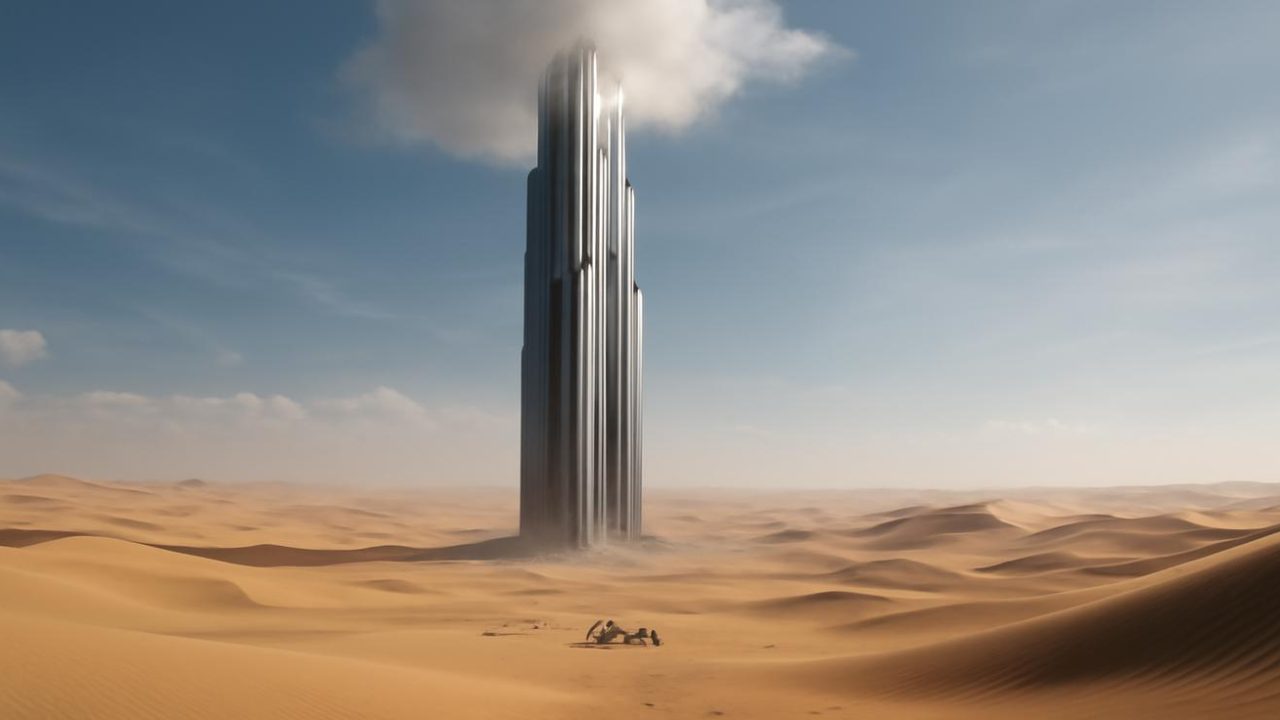
A kilometer-high tower rising from empty desert represents one of architecture’s most ambitious—and arguably most questionable—pursuits. When developers unveil renderings of these vertical cities, they frame them as triumphs of human engineering and vision for the future.
But critics argue these megastructures represent something far different: a profound disconnect from environmental reality and sustainable development principles. The question isn’t whether we can build a tower this tall in one of Earth’s harshest climates—it’s whether we should.
The desert presents unique challenges that make supertall construction not just difficult, but potentially wasteful on an enormous scale.

The Engineering Reality Behind Desert Skyscrapers
Building a kilometer-high tower anywhere requires massive resources, but desert construction amplifies every challenge. The physics become increasingly unforgiving with each added meter of height.
Structural demands grow exponentially as towers climb higher. A 1,000-meter structure doesn’t just need more materials—it needs exponentially more steel and concrete to support its own weight. Every floor added increases the load on everything below it.
The desert environment compounds these challenges in specific ways. Extreme temperature variations between day and night create constant expansion and contraction stress on building materials. Sand infiltration requires sophisticated filtration systems throughout the structure.

Most critically, cooling costs in desert climates can be astronomical. Glass facades facing intense desert sun create massive heat gain that must be countered with equally massive cooling systems. The energy required to maintain comfortable temperatures for thousands of occupants in a vertical desert city represents a significant environmental burden.
The Hidden Environmental Costs
Beyond the obvious construction challenges, desert supertalls carry hidden environmental costs that raise questions about their sustainability claims.
Water consumption becomes a critical issue in arid environments where this resource is already scarce. A tower housing thousands of people requires enormous quantities of water for drinking, sanitation, cooling systems, and fire safety—all in regions where water scarcity is often a defining characteristic.

Energy infrastructure must be built to support these vertical cities. The electrical grid needs capacity not just for normal operations, but for the intensive cooling, elevator systems, and emergency backup power that supertall buildings require.
| System | Desert Challenge | Resource Impact |
|---|---|---|
| Cooling | Extreme heat, sun exposure | Massive energy consumption |
| Water supply | Scarcity, distance from sources | Infrastructure, transportation costs |
| Elevators | Sand infiltration, heat stress | Complex maintenance, backup systems |
| Structure | Temperature fluctuation | Specialized materials, reinforcement |
The transportation infrastructure required to move people and materials to isolated desert locations adds another layer of environmental impact. Unlike urban towers that integrate with existing transit systems, desert megastructures often require entirely new transportation networks.
Why Desert Towers Challenge Traditional Progress Models
Traditional definitions of progress emphasize solutions that can be replicated, scaled, and shared broadly. Desert supertalls challenge this framework in several ways.

These projects typically serve exclusive populations rather than addressing broad housing or development needs. The enormous costs and resource requirements mean they’re accessible only to wealthy individuals or corporations, making them monuments to inequality rather than progress.
Sustainability experts point out that truly progressive development works with natural systems rather than against them. Desert ecosystems evolved over millennia to function efficiently with minimal resources and extreme conditions. Imposing energy-intensive vertical cities disrupts these natural patterns.
The opportunity cost argument is significant: the resources required to build and operate a single kilometer-high desert tower could potentially create more sustainable, accessible development elsewhere.

Some urban planners argue that real progress in desert development would focus on low-impact, climate-adapted architecture that learns from traditional desert building techniques rather than imposing temperate-climate solutions through brute force engineering.
The Spectacle Versus Strategy Debate
Critics argue that desert supertalls represent spectacle masquerading as strategy—impressive visual statements that don’t address real development challenges.
The marketing around these projects often emphasizes breaking records and pushing boundaries rather than solving problems. Height becomes an end in itself rather than a means to achieve better outcomes for people or the environment.

Urban development experts note that cities typically grow organically around resources, transportation, and human needs. Placing massive structures in isolated desert locations reverses this logic, requiring enormous infrastructure investment to make them viable.
The psychological impact of these projects can be significant. They demonstrate human capability to build in extreme environments, but critics question whether this capability should be exercised when more sustainable alternatives exist.
What Comes Next for Extreme Architecture
The future of desert supertalls will likely depend on evolving environmental standards and resource constraints. Climate change concerns are pushing architecture toward more sustainable approaches.

Some architects are exploring alternative models for desert development that work with rather than against environmental conditions. These include underground construction, earth-integrated buildings, and structures that mimic natural cooling and water collection systems.
Regulatory frameworks may eventually limit the environmental impact of extreme construction projects. Carbon accounting and water usage restrictions could make desert supertalls economically unfeasible.
The technology exists to build kilometer-high towers in deserts, but the broader question remains whether these projects represent genuine progress or expensive demonstrations of engineering capability.

Frequently Asked Questions
How much energy does a kilometer-high desert tower require?
The source material notes that keeping thousands of people cooled in glass boxes requires staggering power, with every glass wall facing desert sun creating massive heat infiltration.
What makes desert construction more challenging than urban towers?
Desert environments create extreme temperature variations, sand infiltration problems, water scarcity issues, and require entirely new infrastructure since there are no existing urban systems to connect to.
Are these towers actually sustainable?
Critics argue that the enormous energy requirements for cooling, water consumption, and resource transportation make desert supertalls fundamentally unsustainable despite any green technology features.
Why build in the desert instead of existing cities?
The source material suggests these projects prioritize spectacle and record-breaking over practical urban development, with isolated desert locations chosen for visual impact rather than practical benefits.
What would truly progressive desert development look like?
According to the analysis, genuine progress would involve climate-adapted architecture that works with natural desert systems rather than imposing energy-intensive solutions that fight against environmental conditions.
Who actually benefits from these towers?
The source indicates these projects serve exclusive populations rather than addressing broad development needs, making them accessible only to wealthy individuals or corporations due to enormous costs.











Leave a Comment